March 2026

March 2026

GCDD’s Education Advocacy Day Highlights Key Priorities for Students with Disabilities

GCDD Advocacy Days Logo 2019FThe Georgia Council on Developmental Disabilities (GCDD) works to support inclusive education, employment, housing, and advocacy for Georgians with intellectual and developmental disabilities (I/DD). On February 4, 2026, self-advocates, parents, educators, and other community members met with lawmakers during GCDD’s Education Advocacy Day to share their experiences with inclusive education in Georgia. Advocates focused on three main priorities: modernizing Quality Basic Education (QBE) in K-12 schools, making Inclusive Post-secondary Education (IPSE) grants permanent, and ending the Georgia Network for Educational and Therapeutic Support (GNETS).

Modernizing Quality Basic Education (QBE)

“The process for funding Georgia’s public-school classrooms has not changed since the mid-1980s,” said D’Arcy Robb, executive director of GCDD. “The state’s QBE formula was created before the internet, before the Individuals with Disabilities Education Act (IDEA) was fully realized, and before inclusion of students with I/DD became an expectation.”

Robb and others say the current funding system does not reflect how much education has changed. Today, teachers have more technology, tools, and resources than they did decades ago. They are better prepared to teach classrooms in a blended learning environment that includes students with and without I/DD. They now use inclusive teaching tools, using team teaching, different ways of presenting lessons, and extra layers of support. However, school funding has not been updated to match these improvements.

“There is a persistent misconception that special education and inclusive classrooms benefit only the students they formally serve,” said Robb. “In reality, many of the instructional approaches now considered essential to high-quality general education were developed and refined through work with students with I/DD.”

Right now, QBE gives schools funding based on broad categories of student needs. But the system is 40 years old and does not reflect today’s standards, including inclusive education. Because of this, students with more complex needs often do not receive enough funding for the support they need.

“Countless devoted educators across our state spend considerable time finding ways around an outdated system,” explained Robb. “But when systems depend on workarounds, students with intellectual and developmental disabilities are often the first to face the consequences through inconsistent and inadequate supports, staffing trade-offs, and unequal access to instruction.”

Making Inclusive Post-Secondary Education (IPSE) Grants Permanent

Early support in K-12 schools is critical for students with disabilities. When students get the help they need early on, they are more likely to succeed in school and move on to IPSE programs at colleges across Georgia. These programs help students build self-advocacy skills and live more independently as adults. Without strong support in K–12, these college opportunities would not be possible.

That is why, along with its K–12 advocacy, the GCDD and disability advocates want to make IPSE grants permanent. Students in IPSE programs cannot use HOPE or Zell Miller scholarships, so the Georgia Legislature created state-funded scholarships for students with I/DD through Senate Bill 246. These grants are part of a five-year pilot program that helps students pay tuition at approved public colleges and are set to end in 2028 unless lawmakers take action. GCDD supports the expansion of IPSE grants to allow students to attend IPSE programs at approved private colleges, as well.

Ending the Georgia Network for Educational and Therapeutic Support (GNETS)

Finally, GCDD is working to end GNETS, a state-run program providing specialized education and therapeutic services to students with I/DD. While the program was created to help students, several speakers at Education Advocacy Day shared concerns and difficult experiences with how it is working in practice. According to Amanda Morris, mother of Gabriel Morris, a 9-year-old GNETS participant:

“Over the four years Gabriel has been enrolled in GNETS, he has experienced constant turnover of teachers and paraprofessionals,” she said. “Many of the teachers were not certified in special education, and he has had over six paraprofessionals during this time. Gabriel’s individualized education program (IEP) requires him to have a one-on-one aide, but after all the aides left, the GNETS program took the one-on-one aid out of his IEP without my consent. His IEP goals were not being met, but instead of trying to improve them, the GNETS program took important goals out of my child’s IEP.”

In addition to concerns about a lack of support, critics say the program separates students with disabilities from their peers in ways that are not fair. In 2016, the federal government filed a civil action raising concerns that GNETS isolates students with disabilities in separate settings that are unequal and not the best environment for learning.

Because of the work of disability advocates across Georgia, there is hope for meaningful change in how the state supports students with disabilities. When advocates share their personal experiences, they help lawmakers understand what needs to improve and push for changes that will benefit future generations of Georgians with disabilities.

For more information, watch a press conference held by Sen. Billy Hickman (R–Statesboro) and GCDD on Education Advocacy Day. Listen to what families and advocates have to say:

Feature Story

Why NOW and COMP Waivers Matter for Georgia Families

March is Developmental Disabilities Awareness Month, a national campaign that began in 1987. It reminds us that people with intellectual and developmental disabilities (I/DD) are important members of our communities and should be fully included in all parts of life—school, work, recreation, and community activities.

In this article, you will read about a young woman with I/DD who is living the life she chooses. She is building an independent and meaningful life with support from her family and the services provided by a Medicaid waiver.


Mia Nobbie is a person with I/DD who leads an active and independent life in Athens, Georgia. She is involved in her community, works four days a week, bowls twice a week, and helps with a Sunday school class at her church. Her success is possible because of the strong support from her parents and siblings. Another important part of her journey has been the Medicaid waivers she receives, which help her get the services and support she needs.

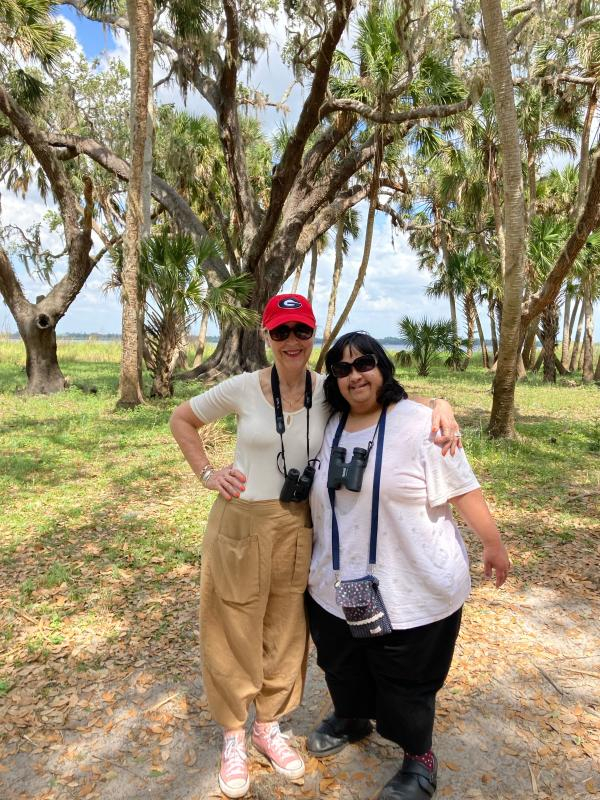
The New Option Waiver Program (NOW) and Comprehensive Support Waiver Program (COMP) are two vital home- and community-based services (HCBS) programs administered by the Georgia Department of Behavioral Health and Developmental Disabilities (DBHDD). NOW and COMP pay for services for eligible people with I/DD that support them to receive care in their home. The funding support also opens doors to new and exciting opportunities to engage with their communities and live independently.Pat and MiaPat and Mia Nobbie

According to Mia’s mother, Pat Nobbie, caring for Mia Nobbie was a team effort and often challenging before her daughter received the waiver. The family sometimes had to pay out of pocket for people to help take her places and spend time with her.

“I was commuting daily from Athens to Atlanta, though fortunately, my boss was very accommodating,” said Pat Nobbie. “My husband worked in Athens, and Mia had two younger siblings in high school. Between all of us, we were able to manage her days. However, Mia was very clear about her own goals: she wanted to work and have her own place to live.”

Mia Nobbie participated in a job-prep program in high school, but she had no job prospects when she graduated. Services funded by her COMP waiver connected her with Briggs & Associates, a Georgia-based supported employment agency that helps individuals with I/DD find meaningful employment and provides support and training.

“Having good direct support staff and job coaching is essential,” explained Pat Nobbie. “Briggs & Associates has supported Mia Nobbie for two decades. She needs very little support now, but they still see her every week. Her direct support staff has been stable for decades, which is unusual.”

For many Georgians, it is not easy to get support through the NOW and COMP waivers. According to the Georgia Budget and Policy Institute, 4,505 people are enrolled in the NOW waiver and 9,789 are enrolled in the COMP waiver. At the same time, 7,891 people are still on the DBHDD waiting list. These numbers show that many people are still waiting for the services and support they need.

“What I want policymakers to understand is that when people have support, they can contribute to the social and economic life of their communities, and their families can continue their contributions as well,” says Pat Nobbie. “I figured out that Mia returns more than half of the cost of her waiver to the local and state economy. She earns enough at her job to pay market rent for her apartment. Her waiver employs two direct support staff, a job coach, and a Support Coordinator. All those employees, including Mia, pay taxes. She pays for groceries, attends social events, buys her own clothes, birthday presents, thereby contributing to the Athens economy.” (See GCDD’s ROI of NOW/COMP Waivers Fact Sheet, featuring Mia Nobbie)

Advocates like Pat and Mia Nobbie are strong voices pushing to expand access to NOW and COMP waivers in Georgia. Lawmakers often say there is not enough money in the budget to provide more services. However, Pat Nobbie believes the state has enough funding to better meet the needs of Georgians with disabilities.

“We need families to speak up. As long as families are taking care of their loved ones with disabilities as best they can, legislators figure the need is not pressing. Talk to them,” encourages Pat Nobbie. “The state has a $10 billion surplus and providing the number of waivers that DBHDD worked out (1,217) would cost $132 million. Enough is enough. People want to be involved in their communities. They want to work and worship and participate and contribute. It’s time to fund this support.”

Feature Story

Letter from Leadership: Georgia Urgently Needs 1,217 NOW/COMP Waivers — The Data Proves It

darcy robbPop quiz! How many NOW/COMP waivers does Georgia *urgently* need?

a. Between 50 and 500

b. We don’t know

c. 1,217

The answer is C. The state urgently needs 1,217 new NOW/COMP waivers.

How do we know? Because we have the data.

During 2025, GCDD staff and Council members were part of a group that worked closely with staff from the Department of Behavioral Health and Developmental Disabilities (DBHDD). Part of that work was about DBHDD’s future plans. Those future plans are to:

  • Create a new tool to determine who qualifies for a waiver.
  • Split the waiting list into three groups.
  • Create a new waiver. That work will take at least another year.

But we all know there are people on the waiting list for a NOW or COMP waiver who can’t wait another year. Caregiving relatives die. People are abandoned in emergency rooms or stuck in hospitals. Young people leave foster care. People in those situations are at extreme risk of crisis if they don’t get a waiver. And by crisis, I mean homelessness, exploitation, incarceration, or death.

It's horrible, but it makes sense. We are talking about some of the most vulnerable folks in the state of Georgia. Remember, it’s hard to even qualify for a NOW/COMP waiver. So, we’re talking about people with the most significant disabilities who are in the hardest situations. If we don’t support them, their lives can unravel quickly. While their situations are usually less dire, students graduating from high school are also included on the urgent list. The goal is to help them move smoothly into community life instead of getting stuck at home with nothing to do. Without this support, parents often have to quit their jobs to take care of them.

This list of people who urgently need waivers is where the other part of our work with DBHDD comes in.

Our working group was made up of GCDD staff and members, DBHDD staff, people with disabilities, family members, and service providers. In the fall of 2025, we all knew that DBHDD’s updated tool and waiting list process would not be ready for some time. And we knew there were plenty of Georgians out there – like the folks mentioned above - who can’t wait for that work to be finished.

The group decided to use DBHDD’s current data to determine how many Georgians urgently need a waiver. I appreciate the DBHDD staff who worked hard digging into their data.

That data shows 1678 Georgians will urgently need a waiver over the next year. The department estimates that 400 people leave waiver services each year, and 61 people leave the waiting list each year.

That means the state needs 1,217 new NOW/COMP waivers in the budget to meet the urgent need. And to administer all those waivers, the department needs 26 new staff members.

Currently, there are only 100 new waivers and no new staff in the state budget. We’ve got work to do.

If you want to advocate to get more urgently needed waivers for Georgians with I/DD, reach out to your state representative and state senator now at https://gcdd.quorum.us/campaign/155704/. Join us for our final Advocacy Day on March 4th. Follow our social media and sign up for email updates to stay informed!

Waivers and enough staffing to support them are one of our top public policy priorities at GCDD. Our other top priorities are:

  • Preserving, protecting and improving education for students with I/DD,
  • No cuts to Medicaid for Georgians with I/DD, and
  • Creating a long-term body working across state agencies to improve services and coordination.

The Council has chosen to focus on these priorities based on input from you, the community we serve. In future Letter from Leadership articles, we’ll take a deep dive into those priorities.

Meanwhile, keep the advocacy UP and enjoy this issue of Making a Difference!

D'Arcy Robb
GCDD Executive Director

Letter from Leadership

Public Policy for the People: Legislative Session Update

charles millerCharlie Miller, GCDD Legislative Advocacy DirectorHello advocates, how in the world are you doing!!

We’re excited to bring you the March edition of our Public Policy for the People article. Y’all… we are heavy in session. When the House and Senate are moving at full speed, it can feel like drinking from a fire hose. The number of bills, the hearings, the amendments, the late nights—it’s a lot. But don’t worry. We’ll help you stay cool when the bills get hot.

In this article, we’re going to: walk through where we are in the legislative process, highlight a few key bills we’re tracking, break down what’s happening with the state budget, and talk about looming Medicaid cuts.

We’ll also share how you can plug in with us at our third and final advocacy day at the State Capitol on March 4, 2026.

Note: The information in this article is current as of 2/15/2026.

Where We Are in the Legislative Session

We are officially halfway through Georgia’s legislative session. Georgia’s session is one of the shortest in the country. It has only 40 legislative days. That means things move quickly, and deadlines matter.

One key date to keep in mind is Friday, March 6, which is Legislative Day 28. This day is better known as Crossover Day. Crossover Day is the day by which a bill must pass out of its original chamber (House or Senate) to remain alive for the session. If a Senate bill does not pass the Senate by Crossover Day, it cannot move to the House. If a House bill does not pass the House by Crossover Day, it cannot move to the Senate. Those bills would have to be reintroduced next year.

Crossover Day always brings long debates, last-minute votes, and sometimes surprises. It’s a turning point in the session, and we’re watching closely.

Bills We’re Following

We at GCDD are advocating for two critical educational policy changes. There has been a lot of conversation this year among teachers, parents, and the entire educational community about the need to update the way Georgia funds our public schools. This is known as the QBE, or Quality Basic Education Act. It was created in 1985 and has not had a major update since! GCDD is working with policymakers and partners on the importance of creating a commission to update QBE for all students, including students with disabilities.

We are also advocating to keep a good practice going in higher education. In 2023, the state created Inclusive Post-Secondary Education (IPSE) grants. These grants allow students attending IPSE programs to use state scholarship money. That is important because IPSE students are not eligible for HOPE scholarships. Right now, the IPSE grants are scheduled to end in a few years. We are advocating to make them permanent.

There are two bills in particular that we’re watching because of their impact on the disability community.

First is Georgia Senate Bill 403, sponsored by Blake Tillery. This bill would expand an existing pilot program that provides autism spectrum disorder screenings, clinical evaluations, training, services, and resources to children in foster care. Rather than creating something brand new, SB 403 builds on a program that already exists and hopes to offer it statewide.

The goal is simple but powerful: ensure that more foster children across Georgia are screened for autism and connected with appropriate support earlier. The program would continue to be developed and managed by the Division of Family and Children Services within the Georgia Department of Human Services. Finding and helping children early can make a big difference in how their lives turn out, especially for children already navigating the foster care system.

The second bill we’re watching is Georgia Senate Bill 433. This legislation would create special license plates for individuals with autism spectrum disorder or other developmental disabilities, as well as for their spouse, parent, or legal guardian. It also requires additional training for peace officers on how to properly recognize and interact with individuals who have autism or developmental disabilities.

That training would involve work between the Georgia Department of Community Health and nonprofit organizations to ensure officers are better prepared for these encounters. The goal is safety, dignity, and better outcomes during interactions that can sometimes end badly because of misunderstandings or a lack of awareness.

Both of these bills directly touch the disability community. We’re watching them closely and making sure your voices are part of the conversation.

The Budget: The Big Conversation

Now let’s talk about the budget—because while policy matters, funding is what makes services real.

Unlike most legislation, the state budget is not affected by Crossover Day. It will move through the process regardless, and it’s one of the most important pieces of legislation each year.

At the beginning of January, the governor presented his proposed Fiscal Year 2027 budget. This budget included funding for only 100 new waivers. Since then, we’ve moved through high-level House and Senate Appropriations Committee meetings. Now the real advocacy begins.

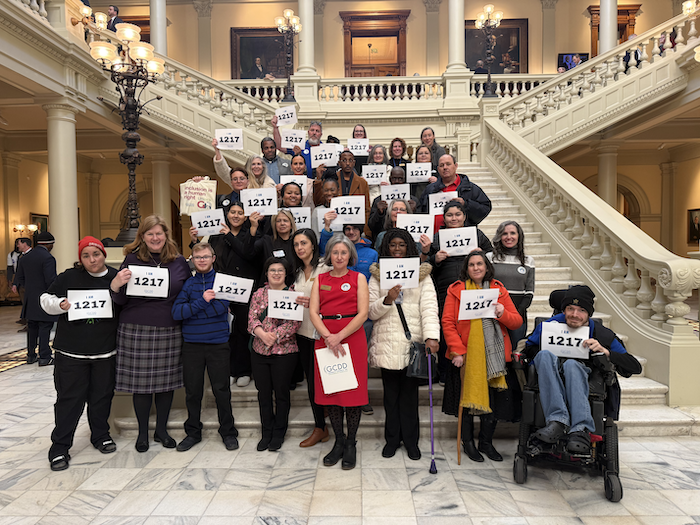
1217 advocacy dayGCDD and Advocates at the Capitol During the 2026 Legislative SessionCurrently, the House Appropriations Subcommittee on Health and Human Services is hearing from state agencies and advocates about why funding matters. This is where your voice is critical.

GCDD is advocating for 1,217 waivers in both the amended and new budgets. You may have heard that more than 7,800 people with disabilities are on the waiver waitlist. While that number is accurate, it doesn’t tell the whole story. It does not tell the difference between someone who needs help right now and someone who might still be in school or have other people to lean on.

Over the past year, we have worked closely with the Department of Behavioral Health and Developmental Disabilities (DBHDD) to better understand and improve how waiver needs are reviewed. Through that teamwork, a new tool was created to better spot the people who need help the most.

Early data from that checklist shows that 1,217 people with disabilities are currently rated as critical or urgent. These are people who are already in crisis or at high risk of entering crisis. Without immediate access to a waiver, many could end up in hospitals, nursing facilities, or other expensive care systems. That results in greater expense to the state and, more importantly, poorer outcomes for the individual.

Paying for these 1,217 waivers is not just the kind thing to do — it also makes good financial sense. This is a powerful moment to reach out to members of the House Appropriations Subcommittee on Health and Human Services and share why waiver funding matters to you and your family. Personal stories move policymakers. We’ve made it easy with a link that allows you to send a pre-written email directly to committee members and the Governor’s office. Take a few minutes to act. It truly makes a difference. Here’s the link: https://gcdd.quorum.us/campaign/155704/

We are working every step of the way to make sure the disability community is always clearly heard under the Gold Dome.

Clouds on the Horizon: Federal Medicaid Cuts

While we are focused on state-level advocacy, we cannot ignore what is happening at the federal level.

Last year, Congress passed HR1, also referred to as “the big, beautiful bill.” This sweeping spending cut and tax package would have a big impact on states. Now that the dust is settling, it’s becoming clear that Medicaid in Georgia may look dramatically different in the coming years.

Georgia’s Medicaid program supports more than 200,000 people with disabilities, out of over 2 million total residents enrolled. That translates to roughly $10 billion in federal funding flowing into our state to support healthcare services.

For people with intellectual and developmental disabilities, Medicaid is not optional; it is foundational. It covers doctor visits, hospital care, dental services, therapies, and non-emergency medical transportation. It also covers critical programs like the Independent Care Waiver Program (ICWP) waiver and the Katie Beckett waiver. Many individuals qualify for Medicaid but do not qualify for a waiver. Medicaid is often the thread holding everything together.

If federal cuts reduce the amount of funding coming to Georgia, the state will be forced to make difficult decisions. That could mean reduced services, harder rules to qualify, or increased strain on families.

We cannot afford to be silent.

No Cuts to Care! Join Us on March 4th at the Gold Dome

GCDD is hosting our third and final legislative Advocacy Day on March 4 at the State Capitol. If you are concerned about how waiver funding or potential Medicaid cuts could affect you, your family member, or your community, this is your moment to show up.

We’ll gather in the morning, go over key talking points, and then head to the Capitol to meet with legislators. You will share why these services matter. You will learn about the real-life impact of policy decisions. And you will remind our elected officials that behind every line item in the budget is a person.

Advocacy can feel intimidating, but you are not alone. When the disability community comes together, the collective voice is strong.

We are halfway through the session. There is still time to influence outcomes. There is still time to fund waivers. There is still time to protect care.

Keep showing up. Keep speaking up. And keep pushing forward—together.

Public Policy For The People

Rethinking School Discipline: Keeping Students with Disabilities Connected to Learning

Georgia Conflict Center

School discipline plays a big role in whether students stay in the classroom and are connected to learning. According to the Georgia Conflict Center (GCC), students with developmental disabilities (DD) are disciplined more often than their peers. And black students with disabilities face the highest discipline rates of all.

Too often, that discipline means students are removed from the classroom through suspension or expulsion. This is called exclusionary discipline. When students are pushed out of school, they lose valuable learning time. They can also lose relationships with teachers and classmates. Over time, this can affect their confidence, progress, and sense of belonging. It also increases the risk of being placed into the juvenile and criminal justice systems.
A project with GCC, called School-Based Exclusionary Discipline Awareness and Education, is working to change that by helping schools learn about restorative practices — a different way to respond to conflict. The Georgia Council on Developmental Disabilities (GCDD) provides funding for this project.

Restorative practices focus on conversation and repair instead of punishment. They are rooted in Indigenous traditions, including Māori, First Peoples, and African wisdom. The goal is not to ask, “What rule was broken and how do we punish?” Instead, the questions become: “What harm was done? What does the student need? How do we make it right?”

“It’s looking at ways to resolve conflict in equitable ways,” said Mikhayla Smith, a GCC team member who oversees the project. “Restorative practices speak to our humanity and involve storytelling, dialogue, and meeting the needs of people who cause and are affected by harm.”

In many schools, discipline follows a simple pattern: If you break a rule, you are punished. The decision is often made without the student’s input. There is little opportunity for the child to explain what happened or to repair the harm.

Restorative practices take a different approach. Students are expected to take responsibility for their actions. But they are also given the chance to make amends — to “right the wrong,” Smith explained.

This approach also asks adults to look deeper. Challenging behavior is often a sign that a student’s needs are not being met. Restorative practices encourage teachers and administrators to ask: What is the root cause? What support does this student need? How can we address the harm while keeping them connected to learning?

“You step back and see the child as a human with needs,” said Smith.

Elena Tothazan, another GCC team member, said school policies can sometimes make exclusion more likely. “When test scores are tied to public funding, we see a trend of schools pushing out students who aren’t performing well,” she said. Schools may feel pressure to protect their numbers instead of investing in students who need more support.

GCC’s campaign focuses on education and community engagement. The team gives presentations in schools and community spaces, talks with families, and connects them to helpful resources. Their outreach is especially focused on families of color. The campaign centers on a simple message: restorative education is inclusive.

This work is helping schools rethink how they respond to harm. Instead of pushing students out, restorative practices aim to keep them engaged in learning. They teach both children and adults how to take responsibility, repair relationships, and solve problems in healthy ways.

The message is clear: accountability and compassion can exist at the same time.

When schools choose restorative practices over exclusionary discipline, they move closer to a system where every child is seen, heard, and supported.

Follow along with the Georgia Conflict Center’s work on Instagram @gaconflict


GCDD Impact

Out of Hand Theatre is Coming to Macon

Something special is happening in Macon, Georgia, on Sunday, April 12, 2026. An exciting event called Reimagining Schools, Neighborhoods & Faith Communities to Include All Children and Youth will take place from 2 to 4 PM at the Tubman Museum, located at 310 Cherry Street.

out of hand theaterThis free event brings together some powerful organizations all working toward the same goal — making sure every child and young person feels like they truly belong. The groups behind it include the Center on Human Development and Disability at the University of Georgia (CHDD UGA), the Georgia Council on Developmental Disabilities (GCDD), Out of Hand Theatre, Wesleyan College, Lipson Advocacy, the Georgia Advocacy Office, and the Tubman Museum.

One of the highlights of the afternoon will be a one-person play performed by Out of Hand Theatre, a Georgia-based theatre company known for using art to start meaningful conversations. After watching the play, guests will have the chance to talk with each other about what they saw — sharing ideas about how to make schools, neighborhoods, and faith communities more welcoming for all kids.

This isn't the first time Out of Hand Theatre and GCDD have teamed up to make a difference. In February 2024, GCDD worked with Out of Hand Theatre to present A Seat at the Table: A Transformative Conversation Around Equity, Disability, and Support. Those gatherings brought together art, dinner, and discussion about the importance of equitable opportunities and supports for Georgians with developmental disabilities and their families. The events were held at Georgia Public Broadcasting in Atlanta and virtually, drawing together people from across the state. Out of Hand Theatre brought years of expertise creating meaningful conversations through the combination of art and dialogue, bringing people of diverse backgrounds together in facilitated conversations about complex issues — and the 2024 events marked their first event focused on disability.

In the spring of 2025, Out of Hand Theatre also partnered with CHDD UGA, the school governance team at Oglethorpe Avenue Elementary School in Athens and others for an Equitable Breakfast event focused on disability inclusion in schools — another example of bringing communities together around one table to listen, learn, and take action for children with disabilities.

Inclusion means more than just being in the same room. It means being truly welcomed — in classrooms, on playgrounds, in churches and synagogues, and in the neighborhoods where we all live. When children with disabilities are fully included, everyone around them learns compassion, understanding, and respect. Communities grow stronger when all voices count.

The Tubman Museum, one of the largest museums in the Southeast dedicated to African American art, history, and culture, is a meaningful and fitting place for this gathering. Its mission of honoring and lifting up all people makes it a natural home for a conversation about belonging.

Guests can look forward to a powerful one-person theatrical performance, light snacks and drinks, and open conversation about what inclusion really looks like — and how we can all help make it happen. On-site childcare and family support will be available, so families with young children are especially encouraged to come.

Registration is now open, so secure your ticket today. Whether you are a teacher, parent, faith leader, neighbor, or just someone who believes that every child deserves a place at the table — this event is for you.

Mark Your Calendar!
Sunday, April 12, 2026
2 - 4 PM Tubman Museum
310 Cherry Street, Macon, Georgia.

GCDD Updates