Letter from Leadership: Public Policy Is Personal
When people hear the words “public policy,” they often think about legislation, committee meetings, or debates under the Gold Dome. They think about bills and resolutions. I understand why. But for me, public policy has never been about paperwork. It's always been about people.
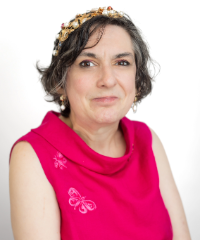 I joined the Georgia Council on Developmental Disabilities in 2024, and now I serve as chair of the Public Policy Committee. My role is to stay informed about issues affecting people with disabilities, help respond when legislation moves quickly, and show up wherever I can, whether that's during the Georgia Council on Developmental Disabilities’ (GCDD) Advocacy Days, legislative hearings, or community conversations.
The work can feel overwhelming sometimes. There is always another issue demanding attention, another decision being made that could affect our lives. But one thing keeps me going: seeing how many people genuinely care. Every GCDD Advocacy Day reminds me that people are willing to stand together and work toward something better. That gives me hope.
The laws our elected officials pass are not abstract ideas. They shape the lives of real people every single day.
One example that means a great deal to me is Georgia's decision to end subminimum wage for workers with disabilities. I remember hearing stories about people working all week and receiving paychecks for only a few dollars. Some argued that the work itself gave dignity to people with disabilities. But I don't believe dignity comes from earning four dollars for a week's work.
I had been talking about that issue for years. When the legislation finally passed, it felt like real progress. I never worked in one of those jobs myself, but that wasn't the point. It should never happen to anyone. Knowing that fewer people will experience that kind of injustice matters to me.
That's why public policy matters.
Many people don't know these issues exist until someone tells them. I didn't become passionate about ending subminimum wage until I learned it was happening. Most people who don't have disabilities, or who don't have disabled family members, simply haven't been exposed to these realities.
Once people understand, many of them care.
That's why sharing information is one of the most important things we can do. Every conversation matters. Every person who learns something new has the potential to tell someone else. Before long, it isn't just a handful of advocates speaking up. It's an entire community.
And lawmakers notice that.
One voice can start a conversation. Hundreds of voices can move policy.
Even during difficult times, I believe change is possible. There are moments when the news feels overwhelming and it seems like progress is moving backward. But that's exactly when we have to keep showing up.
Our legislators work for us. They need to hear from us. They need to understand how their decisions affect not only people with disabilities, but also our families, our friends, our coworkers, our churches, and our communities. We belong in every part of public life, and the policies they create should reflect that.
This year also reminds us of the importance of the Americans with Disabilities Act. The ADA changed what is possible for millions of people, including me.
One of my favorite examples is my best friend. Before she bought her current car, she drove it to my house and made sure my wheelchair fit inside before she decided to purchase it. She wanted to know that wherever she went, I could go too.
That may seem like a small story, but it represents something much bigger. Because of accessibility, I can participate in my community. I was able to attend church, where I met that friend in the first place. Accessibility creates opportunities for relationships, friendships, and belonging.
The ADA accomplished so much, but our work isn't finished.
Accessibility looks different for different people. In my town, there are raised warning bumps at crosswalks that help people who are blind or have low vision. Those same bumps make me stumble regularly. Other intersections have audible signals that help people know when it's safe to cross.
Neither solution is wrong. They simply remind us that disability is not one experience. That's why disabled people have to be part of these conversations. People can only make decisions based on what they know.
I'm not upset with someone for not understanding what it's like to live in my body.
What matters is what they choose to do after they learn.
We have to give people that knowledge.
That's also why GCDD focuses so much on public policy. Individual acts of kindness matter, and I'm grateful for every person who chooses to support our community. But kindness alone isn't enough.
Public policy is about the people. Public policy is for the people. And policies create lasting change.
People move away. Leaders retire. Administrations change. Laws remain. When protections are written into law, they continue protecting people long after any one individual is gone. That's why systemic change matters so much.
If I could leave advocates with one message, it would be this: don't be afraid to take up space.
When I was younger, I thought it was strange that I wasn't afraid of public speaking. Later, I learned about the ugly laws that once allowed people with disabilities to be hidden from public view because our existence supposedly made others uncomfortable.
That history changed how I think about using my voice.
People need to see us. They need to hear us. They need to know that we exist, that we belong here, and that we deserve to help shape the communities we live in.
Family members and allies are incredible advocates, and I'm thankful for them every day. But they aren't living in our bodies. They can't fully speak to our experiences.
That's why disabled people have to keep showing up.
We deserve to be seen. We deserve to be heard. We deserve to take up space.
And when enough of us do, public policy becomes exactly what it was always meant to be: for the people.